Yodel till the cows come home!
 Yodeling is a "Swiss thing"!!
and this link is a reposting of the 11 year old who was a fantastic yodeler!
And if you want online LESSONS!!! Here you go!
Yodeling is a "Swiss thing"!!
and this link is a reposting of the 11 year old who was a fantastic yodeler!
And if you want online LESSONS!!! Here you go!

There's two songs that I can think of that it seems ALL children know. Twinkle, Twinkle and Jingle Bells. And Jingle Bells wins the joyful rendition award. Children really LOVE this song. It seems one thing they most love about it is that right now the whole world seems to be singing this song! They hear variations of it on the radio, TV, at school concerts, even the shopping music at Meijer's...really everyone is singing it. Furthermore when their favorite adults sing it they are smiling and all the cares in the world drift away for those moments.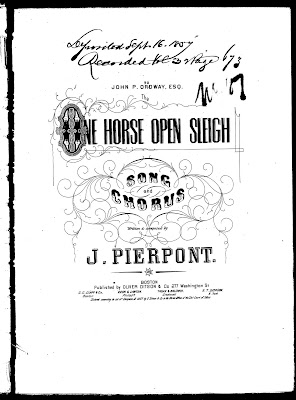
Don't we love it when the 2 year olds begin singing with us? Here are some ways to encourage their attempts to sing with us.
Find moments when you are singing together without a recording or accompaniment so that you can slow...... down...... the...... tempo...... Follow their lead.
Be very attentive to sing on the pitches they are using. You might have to sing way up high or use falsetto to be up where they are!
If you are initiating the sing-a-long try this: Begin singing "Jin-gle Bells, Jin-gle...." leaving off the second "Bells" to see if they will chime in! If they just look at you and listen you have to sing further. Go up to "Jingle all the---" by then they should give you the "Way!".
Giving them the experience of really singing along, in pitch and time with another person will be an important moment musically for them. With this experience they will know what music and resonance really mean.
Most songs have way too many words. The verses: Dashingthroughthesnow,Inaonehorseopensleigh.O'erthefieldswegolaughingallthewayHaHaHa.....
way too many words for a 2 year old. (Well there are some out there that do know all the words but they had to start somewhere!) So for the beginners take out all the words and sing on a favorite syllable like doo doo doo doo doooooo dododoo doo doo doo dooooooo
That way they can join you on the melody. Children even younger than 2 years old can sing along, accurately matching pitches on songs that have very complicated rhythms! Then switch back to the Jingle Bell words because they are latching on to those simple, repetitive words.
These moments are usually fleeting. You take them when they come! While going to the potty. While going down stairs. Between bites of corn or oatmeal. Slow yourselves down so you can hear them and be with them for these irreplaceable moments.
'Tis the short season of their life and means all the world to them.
Sing your way through the week.
Sing and sway cheek to cheek.
Sing and sway every day, Sing, sing, sing.Love, Yvette
Here is an 11 year old girl who played around with her voice and listen to what she came up with! She seems so confident and beautiful. Listen to her Yodel!
Daniel J. Levitin, Ph.D. Associate Professor, James McGill University, was a keynote speaker at the October Kindermusik Convention. We enjoyed his talk about music and the brain and his pop music quizzes where we could identify a piece of music and artist by hearing less than a second of the recording. Today I found an article written by Scott LaFee for the Union-Tribune, which sourced Levitin. This is what caught my eye:
Music does appear to improve brain function, according to scientists. "Early exposure to and learning of music and instruments seems to have clear benefits," Levitin said. "Such children often have improved visual perception, analytical thinking skills and physical coordination. Music helps them focus their attention."
Singing in the Brain .
The Union-Tribune , November 15, 2007
I am also noticing how the students in my classes have shown such growth in their self control and social skills. Taking turns, trading instruments, responding to auditory cues, stopping their excited fast and slow horse trotting and galloping....
I've heard more children using their singing voices, seen more amazing creativity in movement ideas....So many times I wished for my camera!
And sequencing and predicting....memory work....(I'm thinking of the 2 year olds who can tell me what's next in the Watch Me! story book.
Parents, you are doing great work. Keep up the steady beat....keep singing...keep dancing....
Love,
Yvette


